
What Does a Trailer ABS Warning Light Actually Mean?
If you’re asking why is my trailer ABS light on, here’s the direct answer: your trailer’s Anti-lock Braking System has detected a fault — either in a wheel speed sensor, wiring, the ABS modulator, or the ECU. This warning should never be ignored, especially when you’re hauling heavy loads through the Hunter Valley’s mix of highways, steep grades, and rural roads.
The ABS light illuminating doesn’t always mean your brakes have failed entirely. However, it does mean the anti-lock function is compromised, which significantly increases your stopping risk under heavy braking or on wet surfaces.
Common Reasons Your Trailer ABS Light Comes On
There are several reasons this warning light triggers, and understanding them helps you make smarter decisions about whether to keep driving or pull over immediately.
- Faulty wheel speed sensor: This is the most common culprit. Sensors get damaged by road debris, corrosion, or physical impact — all very common on unsealed Hunter Valley roads.
- Damaged or corroded wiring: Trailer electrical connectors and harnesses are exposed to the elements constantly. Moisture ingress, UV degradation, and vibration cause wiring faults over time.
- ABS modulator failure: The modulator controls brake pressure to individual wheels. If it fails, the entire ABS system goes offline.
- Low or contaminated brake fluid: Fluid issues can trigger sensor warnings and affect hydraulic pressure throughout the braking system.
- Faulty ABS control module (ECU): Less common but serious — a failed ECU means the system can’t process wheel speed data at all.
- Blown fuse or relay: Sometimes the fix is straightforward. A blown fuse in the trailer’s electrical circuit can trigger the warning light without any mechanical failure present.
- Loose or corroded trailer plug connection: The 7-pin or 15-pin connector between your prime mover and trailer is a frequent source of intermittent ABS faults, particularly after a long run on rough roads.
Why Trailer ABS Faults Are Especially Risky in the Hunter Valley
The Hunter Valley presents some genuinely demanding driving conditions for heavy vehicle operators. You’re dealing with everything from the New England Highway’s long descents to tight rural property access roads, often loaded with agricultural equipment, machinery, or mining supplies.
ABS is critical in these environments because it prevents wheel lockup during emergency stops, allowing you to maintain steering control. Without a functioning system, a fully loaded trailer on a wet or gravel surface can jackknife or push your prime mover off course — a serious safety risk for you and other road users.
Australian heavy vehicle operators are also subject to compliance obligations under the National Heavy Vehicle Regulator (NHVR) framework, which requires vehicles to be maintained in a roadworthy condition at all times. An active ABS fault light can constitute a defect notice if your vehicle is inspected roadside.
How to Diagnose Why Is My Trailer ABS Light On
Before calling in a professional, there are a few checks you can safely perform yourself. These won’t replace a proper diagnostic scan, but they can help identify obvious issues quickly.
- Check the trailer plug and socket: Disconnect and reconnect the trailer plug. Look for bent pins, corrosion, or moisture inside the connector. Clean with an appropriate electrical contact spray if needed.
- Inspect visible wiring along the trailer chassis: Walk the length of the trailer and look for obvious damage — chafed insulation, broken conduit, or wiring hanging too low and scraping the ground.
- Check wheel speed sensor cables at each axle: Look for cracked or severed sensor cables near the brake assemblies. These are vulnerable to heat, debris, and impact.
- Check the fuse box: Locate the trailer’s fuse panel and check for any blown fuses related to the ABS circuit. Refer to your trailer’s wiring diagram for the correct fuse location.
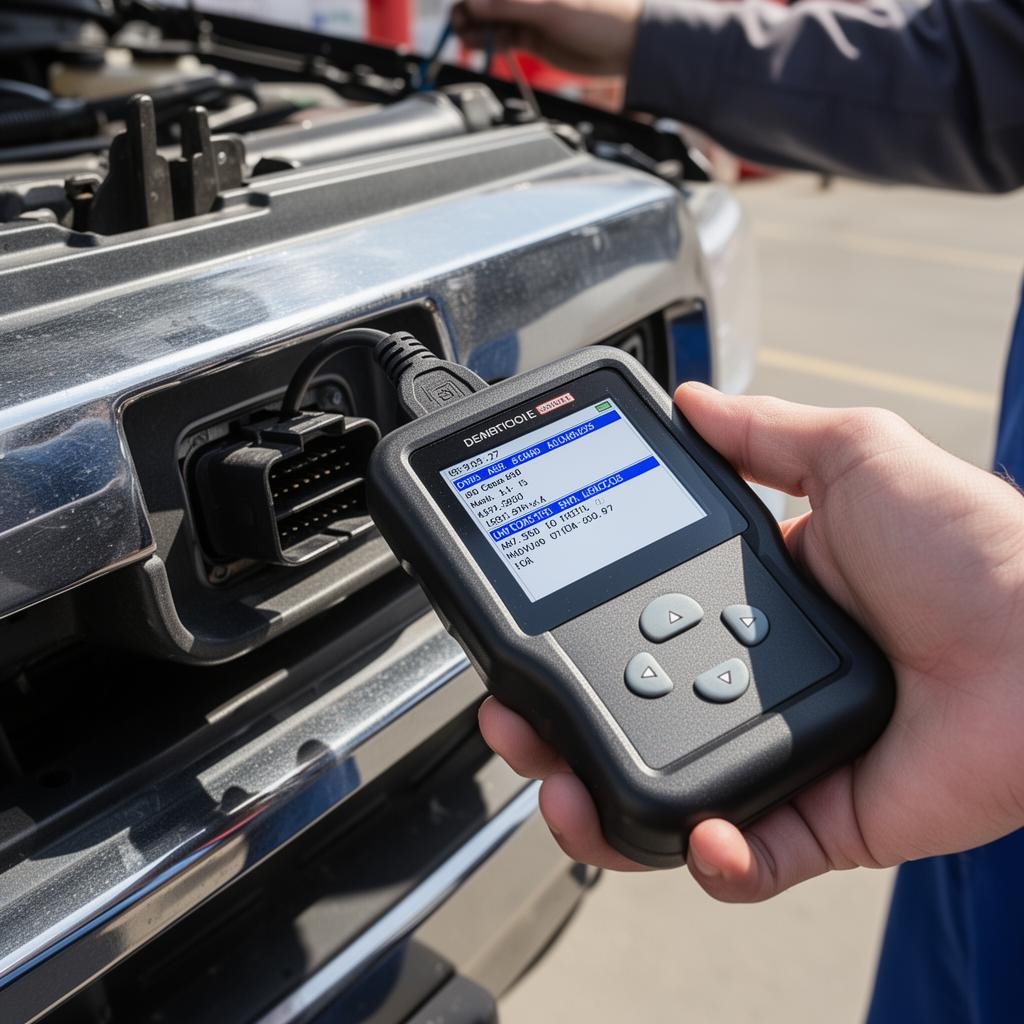
If none of these checks reveal an obvious problem, the fault will require an OBD/diagnostic scan tool capable of reading trailer ABS fault codes. This is specialised equipment that most owner-operators don’t carry on the road.
For a broader understanding of your trailer’s electrical system and how ABS integrates with your brake controller setup, visit the RAM Auto Electrical website for more information on heavy vehicle electrical services.
Can You Drive With the Trailer ABS Light On?
Technically, your brakes will still function — the ABS light indicates the anti-lock function is offline, not that your brakes have failed completely. However, driving with an active ABS fault is genuinely risky and potentially non-compliant with NHVR roadworthiness requirements.
If you’re on a highway with a light load and good conditions, you may be able to complete your run safely. But if you’re descending a steep grade, running in wet conditions, or carrying a heavy load, you should seriously consider stopping and getting the fault assessed before continuing.
When to Call a Professional
If your basic checks haven’t identified the fault, or if the light returns shortly after a reset, it’s time to bring in a qualified auto electrician with heavy vehicle experience. ABS diagnostics require specialised scan tools, knowledge of trailer wiring schematics, and hands-on experience with brake system components — this isn’t a job for a general mechanic.
RAM Auto Electrical services heavy vehicle operators across the Hunter Valley and surrounding regions. The team carries the diagnostic equipment needed to read trailer ABS fault codes, test wheel speed sensors, and repair or replace wiring harnesses and ABS modulators efficiently — getting you back on the road compliantly and safely.
Don’t wait until a roadside inspection or, worse, a near-miss. Contact RAM Auto Electrical to book a trailer ABS diagnostic today.
Conclusion
Understanding why is my trailer ABS light on is the first step to keeping your rig safe and legally compliant on Hunter Valley roads. The most common causes include faulty wheel speed sensors, damaged wiring, connector issues, and ABS modulator or ECU faults — all of which require prompt attention.
Start with the basic checks outlined above, but don’t delay a proper diagnostic if the fault persists. Your safety, your load, and your compliance record all depend on a fully functional braking system. Reach out to RAM Auto Electrical for expert, local support you can count on.
Frequently Asked Questions
Can a dirty wheel speed sensor trigger the trailer ABS light?
Yes, absolutely. Metal debris and brake dust can accumulate around the wheel speed sensor and disrupt its signal to the ABS control module. In some cases, carefully cleaning the sensor and its reluctor ring resolves the fault without any parts replacement needed.
Will the trailer ABS light reset itself once the fault is fixed?
Sometimes the light will clear on its own after the underlying fault is repaired and the system completes a self-check cycle during driving. However, in many cases the fault code needs to be manually cleared using a diagnostic scan tool, even after the physical repair is completed.
Is a trailer ABS fault the same as a brake failure?
No — a trailer ABS fault means the anti-lock braking function is offline, but your base brakes should still operate. That said, your stopping ability in emergency situations is significantly reduced without ABS, particularly on wet or loose surfaces, so the fault should be treated as urgent.
How often should trailer ABS systems be inspected?
As part of your regular heavy vehicle maintenance schedule, ABS components including sensors, wiring, and connectors should be inspected at every major service interval. Given the harsh conditions on Hunter Valley roads — dust, heat, and corrugations — more frequent checks are advisable for trailers doing high kilometres on unsealed roads.